



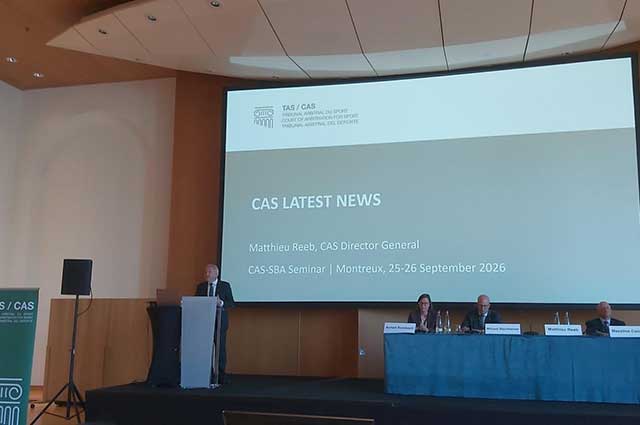
We were at the 10th CAS Conference on International Sport Arbitration
On 25 and 26 September, our partner, José Páez, attended the 10th edition of the Conference on International Sport Arbitration organised by the Court of Arbitration for Sport (CAS) and the Swiss Bar Association (SAV/FSA) in Montreux, Switzerland
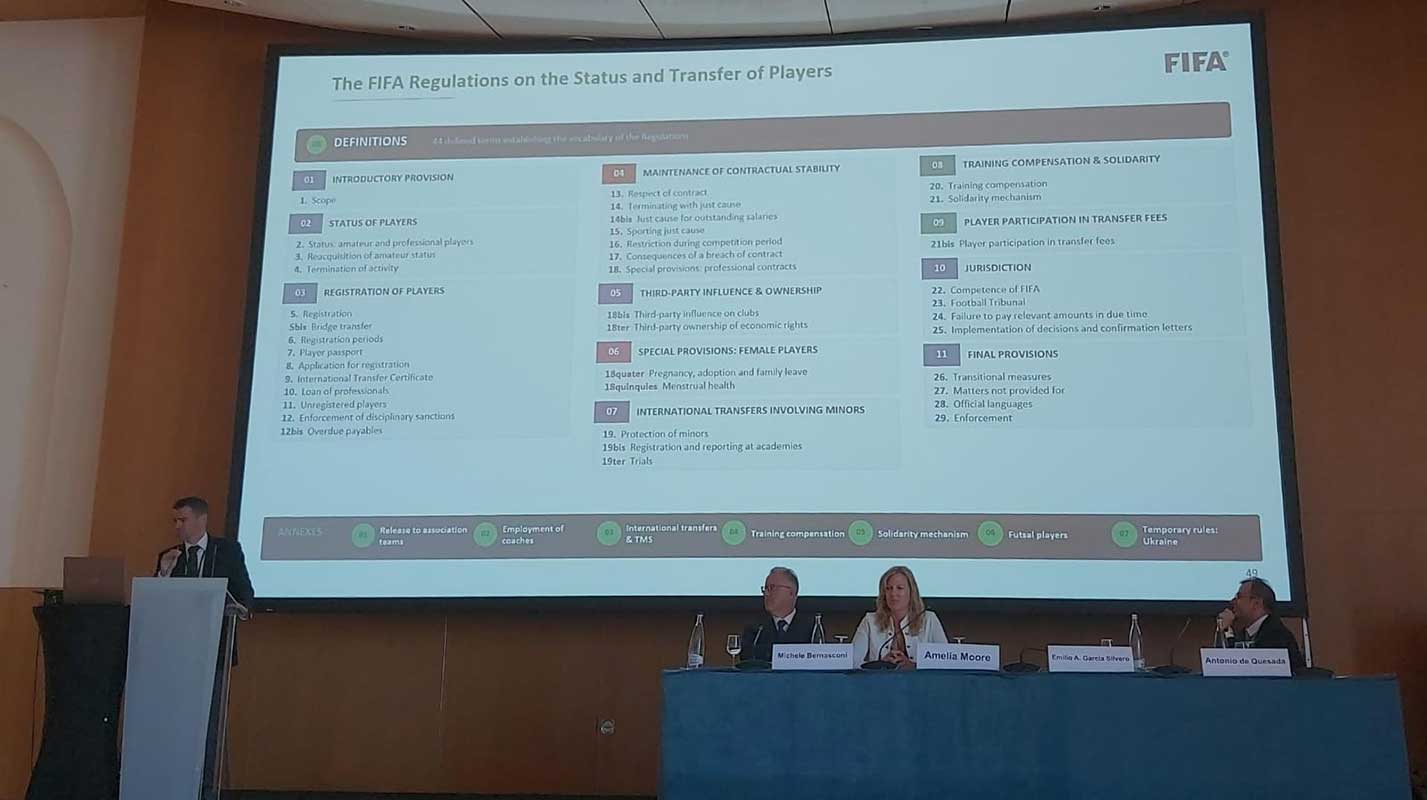
Over two days, the conference brought together leading practitioners, arbitral institutions and sport governing bodies officials, and academics to discuss some of the most topical developments in international sports arbitration, including human rights, competition law, football disputes, anti-doping, field-of-play rules, and the latest developments in FIFA regulations. Several discussions were particularly relevant to the work of PZCR Legal, at the intersection of sports law, arbitration, and EU & competition law.
Among them:
“Competition Law and Sports: The future after the recent jurisprudence of the European judicial authorities” – an especially timely discussion on the implications of recent developments in EU competition law and their interaction with the autonomy and regulatory structures of sport.
“Multi-Club Ownership: Where are We? A round-table debate” – a fascinating discussion of one of the most complex and rapidly evolving issues in European professional football, where competition law, sporting integrity and the regulatory framework of football increasingly intersect.
“FIFA Update: The FIFA Reforms, the new Regulations, the next steps” – providing valuable insight into the current evolution of FIFA’s regulatory framework and its implications for football stakeholders and sports disputes.
Our partner, José Páez, had the opportunity to raise a question following the presentation on Competition Law and Sports concerning a practical issue at the intersection of EU fundamental rights, arbitration and FIFA’s regulatory framework.
More specifically, the question concerned how, in practice, a party’s right under Article 19(1) TEU and Article 47 of the EU Charter of Fundamental Rights could be safeguarded –even indirectly– where an award in a football-related dispute, which might otherwise be capable of being challenged by way of annulment before the courts of an EU Member State if the seat of arbitration were located there rather than in Lausanne, will normally be enforced through the FIFA Disciplinary Committee, while FIFA’s statutes prevent football stakeholders from resorting to national courts.
Here is the question, which we would love those of you who may be interested in finding a solution meeting the minimum requirements identified by the CJEU in the RFC Seraing judgment (C-600/23) to have a go at answering:
What is the EU-law review mechanism where FIFA can enforce the CAS award through its own disciplinary system without first seeking recognition or enforcement before a national court, while FIFA’s regulatory framework simultaneously restricts recourse to national courts?
It is precisely these points of intersection –between sporting autonomy, arbitration, EU law, fundamental rights and competition law– that make international sports law such a fascinating and continuously evolving field.
